


Does SEO Still Matter in the Age of AI Search? What Business Owners Should Know
Almost every individual working in digital marketing and content writing has the same question these days: Is SEO dead in 2026? A simple yes or no answer to this is not sufficient anymore. Most people argue that SEO is no longer worth the investment because around 68 percent of Google searches in the first four months of 2026 ended without anyone clicking a link (new SparkToro research based on Similarweb clickstream data). This is because users get their answers above all those links in the form of an AI Overview.
However, one more truth that this argument misses is that those answers are pulled from somewhere. When you get your answers in AI Overviews, ChatGPT, Gemini, or Perplexity, they are extracted from content that is trustworthy. While the website where this content is published may not get the click, it is still helping the buyer make a decision.
SEO in the age of AI search has not become irrelevant. But if you are still optimizing your website the same way as you did in 2022, rather than saying you are doing SEO wrong or that SEO won’t bring you the expected results anymore, we would say that your approach is outdated.
What AI Search Actually Depends On
While every business today wants to appear in AI Overviews, it is also important to understand how to rank in AI search results. The phenomenon is simple. When an AI platform gives the user an answer (whether it is Google’s AI Overview, Perplexity, or ChatGPT), it usually pulls that answer from a source. So, AI-generated answers are often grounded in multiple authoritative content pieces.
It pulls content from websites, articles, business profiles, industry publications, directories, and other digital platforms. It decides which sources to trust using certain signals.
These signals include:
-
Topical Authority:
When your content covers a subject in depth from different angles, it is a demonstration of expertise. AI systems identify and prefer such sources, not generic sites that touch different topics with barely any depth.
-
Structural Clarity:
Writing structured content for AI search is also important. This includes well-organized pages with clear H1, H2, H3 headers, short paragraphs, well-defined sections, and schema markup.
-
Consistent and Accurate Information:
The same facts, brand narrative, and positioning should be replicated across your website, LinkedIn, press releases, and other online mentions. AI models scan multiple sources and favor authoritative, consistent, and well-supported information.
-
Credible Citations:
Guest posts, directory listings, editorial placements, and industry publication mentions are needed to build an external authority trail. Other than what a brand says about itself, AI systems can also use this trail to verify expertise.
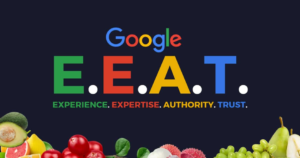
These may not sound like new concepts, but they are not. They are E-E-A-T (Experience, Expertise, Authoritativeness, and Trustworthiness), the framework that Google uses to evaluate content quality.
With this understanding, the answer to “does SEO still matter in 2026” becomes a bit straightforward. The fact is, AI search also broadly depends on the same signals that SEO has been aiming to strengthen.
Here are some interesting facts:
- In 2026, 53% of your website’s traffic still comes from organic search, so search engine optimization is still worth investing in.
- Industry experts predicted organic search to drop by 25% to 60% YoY (year-over-year), but it declined only by 2.5%.
- 98% of marketers plan to increase their AI SEO budget in 2026, despite the growing popularity of AI search.
AI search did not kill SEO; it made the gap between a well-built, clear website and a poorly-built, unclear one brutally visible, that too in real time, in front of the client.
SEO vs AI Search 2026: What Has Changed and What Stayed the Same
Many businesses are making the mistake of seeing SEO and AI search as two different disciplines, as if the arrival of AI tools means that the traditional ranking strategies aren’t relevant at all. The truth isn’t black or white; it lies somewhere in between. Here’s a look at what has changed and what is the same in SEO vs AI search 2026:
What Has Changed:
The biggest shift observed is in user search behavior in 2026, including where they find answers, how they phrase queries, and where their research begins.
-
Where the Answers Appear:
For users with informational queries, the answer they are looking for now appears inside an AI-generated summary at the top of the SERPs. Many users read it and leave; so even if a website has #1 rank, the user may not scroll past the AI Overviews to click it.
-
How Queries are Phrased:
Users are increasingly typing full conversational questions rather than just keyword fragments. AI Overviews appear in 57.9% of question queries, and 46.4% of queries have a length of 7+ words.
-
Where the Search Journey Begins:
A study suggests that 37% (more than one-third) of the users’ search journeys start on ChatGPT, Perplexity, or Gemini, instead of traditional search engines with ads and blue links.
What Stayed the Same:
While zero click search in 2026 and many other things have changed, there are other aspects that are still the same.
-
Authority Determines Visibility:
Just like Google’s ranking algorithm, AI systems also draw from sources that they find to be trustworthy. E-E-A-T signals that have been important for SEO are also important for getting cited in AI responses.
-
Structure Determines Retrievability:
Both traditional search crawlers and AI retrieval systems are known to reward well-structured content, with clear headers, a logical flow, and well-defined sections.
-
Backlinks Signal Authority:
Strong backlink profiles often correlate with authoritative websites, making those sites more likely to be surfaced and cited.
What Websites Need to Do in the AI SEO Era

The sites that are gaining popularity in 2026, in both traditional rankings and AI-generated answers, share these characteristics:
- Build a good site structure with schema markup for AI search and SERP ranking
- Answer specific questions instead of writing on generic topics
- Ensure your expertise signals are consistent across the web
- Update your existing content regularly
- Answer conversational questions
- Improve topical authority
Questions answered in brief:
-
Does SEO still matter in 2026?
Yes, since organic search still drives a significant part of website traffic and AI systems also pull content from authoritative websites, SEO matters in 2026.
-
What does structured content for AI search actually mean?
Writing structured content for AI searches means that you use clear H1, H2, H3 headers, write short paragraphs, and include FAQs, How-tos, and schema markup in your content.
-
How to rank in AI search results in 2026?
In 2026, writing strong, clear, human content with schema markup, consistent E-E-A-T signals, and direct answers to questions is the key to ranking in AI search results.
Conclusion:
It is clear that SEO still matters in the age of AI searches, but what SEO needs to accomplish has evolved significantly. AI search platforms depend on the web to pull the answers you are looking for, and E-E-A-T matters for them as much as for a well-executed SEO strategy in 2026. Just picking up a bunch of keywords from a research tool and stuffing them in your content is not enough. Your strategy needs to be more precise, with structured content, demonstrated expertise, consistent authority signals, and a valuable answer to what users are looking for.
Want an AI SEO strategy that works for your business? Talk to the team at Dynamix Digitech, a team of digital marketing experts who can help your business climb the success ladder!